Skip to Content
Happy Pride 🏳️‍🌈 Wellness professionals get 3 months free with code ALLY
1 July 2026

The Myth of “Normal”

Many of us spend our lives trying to be normal. But what if normal is simply a social agreement that changes across cultures, generations, and lived experiences?

Table of contents

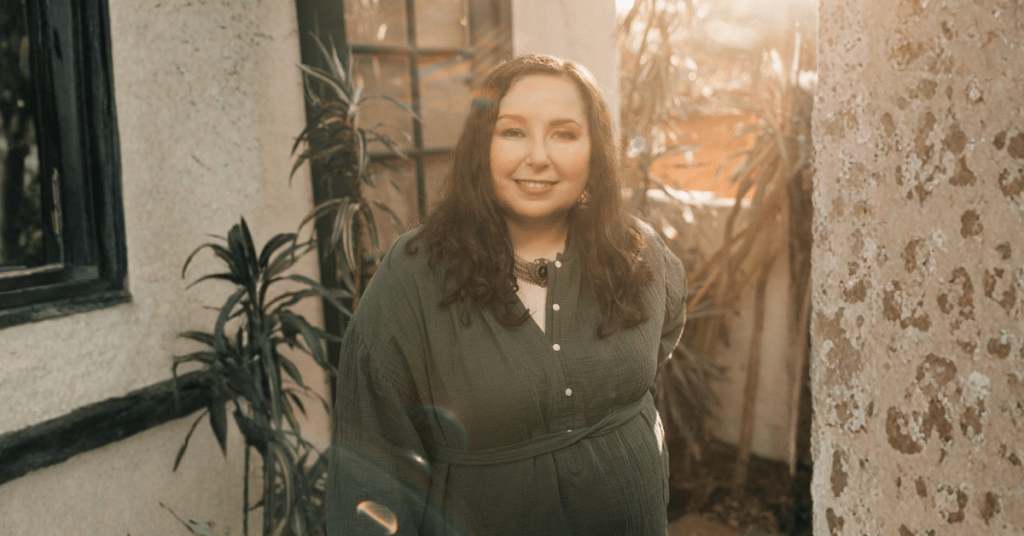
By Noah Buchanan, Associate Professional Clinical Counselor and founder of the Transcend Stigma Project

The myth of “normal” explorers how society creates narrow expectations for what it means to be acceptable, successful, healthy, or human. This piece challenges the idea that normal is fixed or universal and instead invites readers to consider how culture, drama, identity, disability, family systems, and social norms shape the way people experience themselves and others. At its core this article is about moving away from judgment and towards curiosity. Rather than asking whether someone is normal it asks what has shaped them, what they have survived, what support they need, and what environments allow them to thrive. It reminds readers that difference is not automatically deficiency and that the goal of healing is not to become normal, but to become more Fully ourselves.

What if the problem isn’t that we don’t fit in, but that we spend too much time chasing a standard that was never designed to include the full range of human experience?

From an early age, many of us are taught that there is a “right” way to be. The right way to learn, communicate, breathe, love, work, and to succeed.

What are these expectations come from family, schools, workplaces, culture, religion, or even the mental health system, the message often sounds the same. If you are struggling, different, emotional, quiet, loud, sensitive, disabled, queer, neurodivergent, or simply unlike those around you, it could begin to feel as though something about you is fundamentally wrong. But what if “normal” Is less of an objective reality and more of a social agreement?

What if normal changes depending on where you live, When you were born, the culture you grew up in, and the values of the people around you? The more we examined the idea of normal, the more it begins to unravel. 

Normal is a Moving Target

Think about how much society has changed over the past century. Ideas that were once considered normal on how recognized is deeply harmful. Practices that were once stigmatized are now understood as ordinary parts of human diversity.

Concepts of family, gender, relationships, disability, mental health, and identity have all shifted overtime. But one generation considers acceptable, another may question entirely. If normal constantly changes, perhaps it was never a fixed destination to begin with. Instead, normal often reflects the dominant values of a particular place and time. 

The Cost of Chasing Normal

The pursuit of normal can become exhausting. People hide parts of themselves to avoid rejection. They mask emotions to appear composed. They suppress identities to feel safe. They learn to apologize for needs that are entirely human. Over, the goal shifts from living authentically to appearing acceptable.
 
Many people in therapy believing they need to become “normal.” Yet beneath that wish is often something much deeper. They want to feel accepted and to belong. But more importantly they want to stop wondering whether they are too much, too little, or somehow fundamentally different. Those are profoundly human longings.

Difference is Not Deficiency 

One of the greatest misunderstandings in our culture is the tendency to interpret Difference as dysfunction. Some differences do create real challenges. Mental conditions can be profoundly distressing. Trauma can reshape how people experience safety, relationships, and the world around them. Disabilities can involve significant barriers.
 
Acknowledging those realities matters. At the same time, not every difference is a disorder. Some differences reflect personality, culture, identity, and adaptations to different environments. But more importantly some simply reflect a remarkable diversity of human beings. The challenge is learning to distinguish between genuine suffering that deserves support and natural human variation that deserves acceptance. 

Context Matters

Human behavior does not occur in a vacuum. A child who struggles to concentrate may be responding to chronic stress. An adult who appears emotionally distant may have learned that vulnerability was unsafe. Someone who constantly anticipates rejection may not be irrational if rejection has been a repeated experience throughout their life. Without context, behavior is easier to judge. 
 
With contacts, behavior often becomes understandable. Understanding context does not mean excusing harm. It means recognizing that every person carries a history we cannot immediately see.

Perhaps the Better Question

Instead of asking whether someone is normal, perhaps we should ask different questions.
 
What has shaped this person? What strengths have helped them survive? What environments allow them to thrive? What barriers continue to stand in their way? What support would help them live more fully?
 
These questions move us away from judgment and towards curiosity.

Moving Beyond Normal

Perhaps the goal was never to become normal.
 
Perhaps the goal is to become more fully ourselves period to understand our stories without being trapped by them.
 
To recognize our struggles without reducing ourselves to them period to appreciate both our shared humanity and our individual differences. The human experience has never fit neatly into a single Definition. It is expansive, contradictory, beautiful, painful, and endlessly diverse. Maybe that isn’t evidence that something has gone wrong. Maybe that has been the point all along.

About the Author

Noah Buchanan is an Associate Professional Clinical Counselor and founder of the Transcend Stigma Project. Their work focuses on supporting trans and gender-diverse individuals through affirming, stigma-informed care. Noah brings both clinical insight and lived-informed perspective to conversations around identity, mental health, and systemic barriers. View Noah’s profile on TeleWellness Hub


Latest writings

The latest news, technologies, and resources from our team.