
Many people hesitate to seek mental health support because they wonder if their struggles are serious enough.
You do not have to wait until things feel overwhelming to ask for help. This guide will walk you through when reaching out for support may be the right step.
57%
of U.S. adults with a mental illness receive no treatment in a given year. (NAMI)
11 yrs
Average delay between first symptoms and first treatment for mood disorders. (MHA)
75%
of all lifetime mental health conditions begin before or by the of age 24. (NIMH)
The Myth That Your Pain Is Not “Serious Enough”
Therapy is not reserved for people in crisis. It is not a last resort. And it is not something you have to earn by suffering long enough.
Most people who could benefit from mental health support never seek it because they spend years asking themselves: Is this bad enough? Am I overreacting? Other people have it worse.
That internal negotiation is one of the most reliable signs that something is wrong. Because when you are genuinely okay, you do not spend significant mental energy questioning whether you are okay.
“Therapy is most effective when you start before you hit rock bottom. Waiting for the crisis is like waiting for the kitchen fire before buying a smoke detector.”
The standard clinical benchmark is straightforward. When emotional distress lasts longer than two weeks, or when it starts to interfere with how you function at work, in relationships, or in your daily routine, professional support is warranted. You do not need a formal diagnosis. You do not need a dramatic backstory.
Emotional Signs You May Need Mental Health Support
Emotions are information. When the same emotional experiences keep showing up, intensifying, or staying longer than they should, that pattern matters. Here are the emotional signals most commonly associated with a need for professional support.

Persistent Sadness, Emptiness, or Hopelessness
Everyone has hard days. But when sadness becomes a baseline, when you wake up feeling hollow without a clear reason, or when hope for things improving feels genuinely out of reach, that is not a bad week. That is a sign worth taking seriously.
You may be experiencing this if:
- ➝ You feel sad, numb, or empty most days, not just occasionally
- ➝ You have lost interest in things that used to bring you satisfaction
- ➝ Positive events feel flat or unreachable
- ➝ You find yourself thinking in permanent terms: “It will always be like this”
- ➝ You feel like a burden to the people around you
Anxiety That Will Not Quiet Down
Some anxiety is adaptive. It helps you prepare, focus, and respond to real threat. But anxiety that is chronic, disproportionate, or that you cannot turn off is not your nervous system working correctly. It is your nervous system stuck in a loop that it cannot exit on its own.
You may be experiencing this if:
- ➝ You worry excessively about things that are unlikely to happen
- ➝ Your body feels tense, on edge, or wound up much of the time
- ➝ You avoid situations, people, or places because of fear
- ➝ Panic attacks or intense physical anxiety symptoms are occurring
- ➝ Your mind runs worst-case scenarios automatically, even when things are fine
Emotional Numbness or Feeling Disconnected
Shutdown is a form of suffering too. Feeling nothing is not the same as feeling okay. When your emotional range narrows significantly, when you feel detached from your own life, or when it seems like you are watching yourself from the outside, these are signs that your nervous system may be in a protective state that needs support to come out of.
Behavioral Signs It Is Time to Talk to Someone
Behavior often changes before we consciously realize something is wrong. When routines, habits, or patterns shift in ways that feel out of your control or unlike you, that is your nervous system communicating something it cannot put into words.
Withdrawing from People and Activities
This might look like:
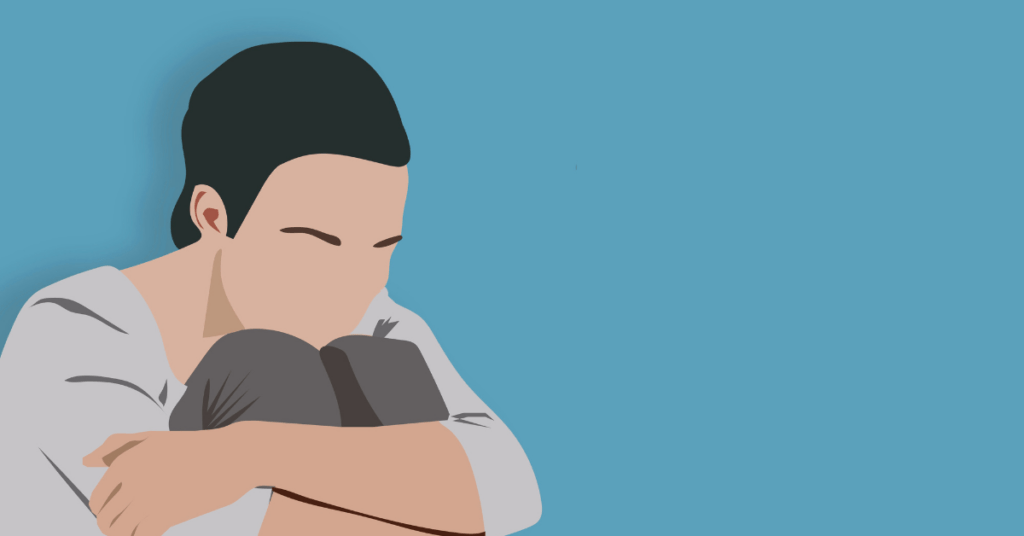
- ➝ Turning down plans you would normally enjoy
- ➝ Letting friendships go quiet without intending to
- ➝ Spending significantly more time alone than usual
- ➝ Feeling like others would not understand or do not really care
- ➝ Struggling to engage even when you want to
Significant Changes in Sleep or Appetite
Sleep and appetite are two of the most sensitive gauges of mental health. When either changes sharply, it is rarely a coincidence. Sleeping too much, too little, or waking repeatedly through the night, eating significantly more or less than usual, or losing interest in food entirely are all worth noting. Especially when they persist for more than a couple of weeks.
Using Substances to Cope
Alcohol, cannabis, prescription medication, or other substances becoming a primary way to unwind, numb out, or get through the day is a clear signal. The substance is not the problem. The need to escape that it is solving is the problem, and that is exactly what a therapist can help you address.
Worth noting: Many people who develop substance use patterns are self-treating untreated anxiety, depression, or trauma. Getting mental health support often reduces the pull toward substances without making substances the focus of treatment.
Difficulty Functioning at Work, School, or Home
When emotional distress starts costing you at work — missed deadlines, inability to concentrate, conflict with colleagues, declining performance — that is a functional impairment signal. The same applies to school and to basic household tasks. When getting through the day takes everything you have, there is not enough left for the rest of your life.
Physical Signs That Mental Health Is Affecting Your Body
The mind-body connection is not metaphorical. Mental health conditions produce real, measurable physical symptoms. Many people see a primary care doctor multiple times for physical complaints before anyone connects those symptoms to mental health.
Unexplained Physical Symptoms
Physical manifestations of psychological distress include:
- ➝ Chronic headaches or migraines with no identified physical cause
- ➝ Digestive issues: nausea, stomach pain, IBS flares
- ➝ Persistent fatigue that sleep does not fix
- ➝ Muscle tension, jaw clenching, or chronic pain
- ➝ Racing heart or shortness of breath without a cardiac cause
- ➝ Frequent illness from immune suppression related to chronic stress
If you have had a medical workup that did not find a physical cause for ongoing symptoms, that is not a signal that nothing is wrong. It may be a signal to look at the mental health component.
Relational Signs You May Benefit from Support
Relationships are often where mental health struggles become most visible, because they involve sustained presence, vulnerability, and emotional regulation, all of which become harder when we are not okay.

Recurring Conflict or Disconnection
Signs to pay attention to:
- ➝ The same arguments happening repeatedly with no resolution
- ➝ Feeling chronically misunderstood, resentful, or shut down
- ➝ Difficulty tolerating closeness or consistent emotional unavailability
- ➝ Patterns in relationships that feel out of your control
- ➝ Fear of abandonment or difficulty trusting people you care about
Relational patterns are often rooted in earlier experiences, and they rarely change on their own. A therapist helps you understand why the pattern exists before trying to change it.
Normal Stress vs. Something That Needs Support
Stress is normal. Grief is normal. Hard stretches are normal. Not everything requires a therapist. But there is a meaningful difference between a hard time and a mental health condition that warrants professional attention.
Normal Stress / Hard Period
- ✓ Tied to a specific, identifiable stressor
- ✓ Improves as the situation changes
- ✓ You can still function, even if it is harder
- ✓ You feel like yourself on good days
- ✓ Duration is days to weeks, not months
- ✓ You can identify things that help
Worth Seeking Support For
- ⚠︎ Persists beyond the stressor or with no clear cause
- ⚠︎ Interferes with work, relationships, or daily tasks
- ⚠︎ You do not feel like yourself even on “good” days
- ⚠︎ Has lasted more than two weeks
- ⚠︎ Nothing you have tried has helped meaningfully
- ⚠︎ Involves thoughts of self-harm or hopelessness
Specific Life Situations That Warrant Professional Support
Beyond persistent symptoms, certain life experiences consistently benefit from professional guidance, even when the person going through them does not consider themselves someone who “needs therapy.”
| Situation | Why Professional Support Helps |
|---|---|
| Grief and loss | Complicated grief can become depression without support. A therapist helps you process without getting stuck. |
| Trauma or abuse (past or present) | Trauma stored in the nervous system does not resolve through time or willpower alone. Trauma-informed therapy makes a concrete difference. |
| Major life transitions | Divorce, job loss, parenthood, and other transitions disrupt identity and coping systems in ways that benefit from structured support. |
| Relationship breakdown | Patterns that contributed to the relationship ending tend to repeat without professional reflection. |
| Chronic illness diagnosis | Physical illness has significant psychological dimensions. Mental health support improves outcomes for chronic conditions. |
| Burnout | Burnout is a clinical phenomenon, not laziness. It requires more than rest to address. |
| Identity and self-worth struggles | Persistent low self-worth responds well to evidence-based therapy and rarely improves through self-help alone. |
Signs That Require Immediate Support
Some signs go beyond “consider reaching out soon.” If any of the following are present, reaching out today is the right move.
Reach out now if you are experiencing:
Thoughts of suicide or self-harm • Feeling like others would be better off without you • Inability to keep yourself safe • Psychosis, hallucinations, or losing touch with reality • Severe inability to eat, sleep, or care for yourself • Actively planning to hurt yourself or someone else
Call or text 988 — free, confidential, available right now. Or visit our full guide: Mental Health Crisis Numbers to Save Right Now.
How to Actually Take the First Step Toward Mental Health Support
Knowing you need support and knowing how to get it are two different problems. Here is a direct, low-friction path forward.
- Name what you are actually looking for. Anxiety support? Help with a relationship pattern? Processing grief? Naming it makes your search faster and your therapist matching more accurate.
- Decide between telehealth and in-person. Telehealth therapy is as effective as in-person for most conditions, with significantly better access and scheduling flexibility. Many people start with telehealth and never go back.
- Search by specialty, not just availability. A therapist trained in trauma will approach your care differently than a generalist. Matching specialty to your needs is worth the extra 10 minutes of research.
- Use a curated directory instead of a generic search. TeleWellness Hub’s therapist directory lets you filter by specialty, identity focus, and more, so you are matched to providers who are actually a fit.
- Prepare for your first session. You do not need to have it all figured out. “I have been struggling with X and I do not know where to start” is a complete enough brief for a skilled therapist.
- Give it more than one session. The first session is largely assessment and rapport-building. Most people feel the therapeutic relationship take hold by the third or fourth session.
Find a Therapist Who Actually Fits Your Life
TeleWellness Hub is a directory built for independent, licensed telehealth providers. Search by your unique needs. No insurance gatekeeping. No generic matches.
Telehealth Therapy vs. In-Person: Which Is Right for You?
Research consistently shows that telehealth therapy produces equivalent outcomes to in-person care for depression, anxiety, trauma, and most other mental health conditions. The American Psychological Association and the Substance Abuse and Mental Health Services Administration both endorse telehealth as a legitimate and effective modality.
When Telehealth Is Especially Worth Considering:
- ➝ You live in a rural area with limited local providers
- ➝ You have a demanding schedule that makes in-person sessions difficult
- ➝ Leaving the house is itself part of what you are struggling with
- ➝ You want access to a specialist who is not available locally
- ➝ Privacy is a concern — no waiting rooms, no chance of running into someone you know
FAQ: Common Questions About Mental Health Crisis Lines
You should seek mental health support when emotional distress persists for two or more weeks, or when it begins to interfere with your daily functioning, relationships, or work. You do not need to be in crisis, have a formal diagnosis, or have a dramatic reason. If you are questioning whether you need support, that questioning itself is often enough reason to reach out.
Key signs include persistent sadness or emotional numbness, anxiety that will not quiet down, significant changes in sleep or appetite, withdrawing from people you care about, difficulty concentrating or functioning at work, using substances to cope, and feeling hopeless or like things will never improve. Physical symptoms like chronic fatigue, headaches, or digestive issues with no identified physical cause can also signal a mental health component.
Extremely common. Most people who could benefit from therapy delay seeking it because they do not feel their struggles qualify. The truth is that therapy is most effective when started before a full crisis. Suffering quietly until things become unmanageable is not a prerequisite for getting help, and it is not a more virtuous approach. If you are suffering, that is enough reason.
Normal stress is usually tied to a specific cause, improves when the stressor is removed, and leaves your core sense of self intact. A mental health condition persists beyond the stressor, interferes with daily functioning, and does not meaningfully improve on its own. Duration, severity, and functional impact are the key distinguishing factors.
The common clinical guideline is two weeks of persistent symptoms that interfere with functioning. But if you are having thoughts of self-harm, feel unsafe, or are in crisis, you should not wait at all. Call or text 988, or visit our crisis numbers guide for immediate support.
Yes. Multiple studies and clinical guidelines confirm that telehealth therapy produces outcomes equivalent to in-person therapy for most conditions, including depression, anxiety, and trauma. It also offers meaningful advantages in access, scheduling flexibility, and privacy. You can search TeleWellness Hub’s directory to find a licensed telehealth therapist matched to your specific needs.
Matching specialty to your needs matters more than most people realize. A therapist trained in trauma (EMDR, somatic therapy, trauma-focused CBT) will approach your care differently than a generalist. If cultural identity or community experience is important to you, searching for a culturally competent provider is worth the extra step. If you are part of the LGBTQ+ community, an affirming therapist makes a measurable difference in outcomes.